Which kind of patio cover do you need?
Four kinds cover almost every back yard we see. The choice comes down to whether you want sun some of the time, none of the time, or a roof that stands away from the house altogether.
- Operable louvered roofSolar powered. The blades tilt open and shut with the touch of a button.
- Insulated roof panelsA foam core, in 3-, 4- or 6-inch thickness.
- Custom solid roofBuilt to tie into the roofline of the house.
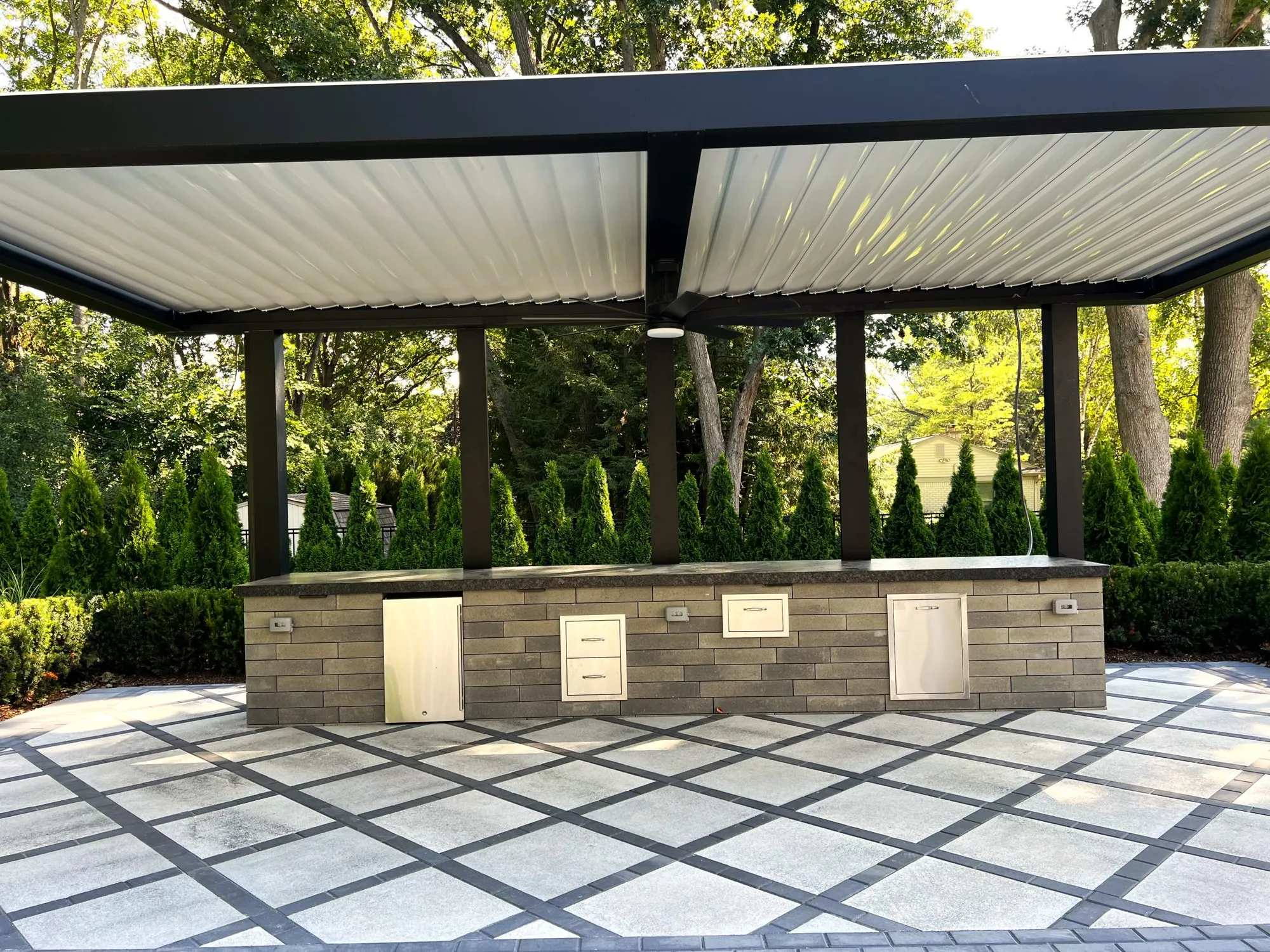
- Freestanding pavilionIts own posts, with privacy walls, lights and fans if you want them.
How does a louvered roof work?
The roof is a row of aluminum blades. Open them and you get sun and a breeze; close them and they shed rain like a solid roof. Ours run on solar power, and they look as good over a second-floor deck as over a kitchen on the ground.
Is an insulated roof worth it in a Tennessee summer?
If you plan to sit under it in July, yes. The foam core in our insulated panels keeps the sun’s heat from soaking through, and it helps bring the temperature under the roof down by as much as 15 degrees. It also takes the drum out of a hard rain or a hailstorm, and it gives us a flat ceiling to set recessed lights and a fan into.
What if the roof should stand on its own?
Then it’s a pavilion: a freestanding roof on its own posts, out by the pool or over a bar, with no connection to the house at all. The ones in these photos carry standing seam metal roofs. Add privacy walls on one or two sides, lights and ceiling fans, or power screens that lower at a button. An open roof attached to the house works the same way with a wood plank or beadboard ceiling, and it can shelter a fireplace.
And when there’s nothing out back to put a roof over yet: “Don’t have a patio or deck to cover? Mr Enclosure can build that for you too!” We lay the patio or build the deck first. If the cover is going over a grill, see outdoor kitchens; if it needs shades or heat, see shades, fireplaces and railings.